Detection lifecycle management
Detection Lifecycle Management
Detections decay faster than lifecycle documentation updates. Parser drift, platform changes, ownership handoffs, and stale validation evidence quietly separate what teams believe is governed from what is actually live.
Most lifecycle content stops at workflow stages — create, deploy, tune, retire. Those stages describe workflow. They do not guarantee operational truth. Mature programmes need something harder: maintaining operational truth over time.
How do you manage the full detection rule lifecycle? Use governed state transitions with explicit ownership, validation evidence, production feedback, and retirement discipline. MaGMa helps structure use case ownership; lifecycle management keeps that structure true in live operations through a Detection System of Record.
What does lifecycle management actually mean?
Detection lifecycle management is not just progression through stages. It holds together four dimensions that generic workflow diagrams rarely capture:
- Governance continuity — ownership, accountability, and state transitions stay current
- Traceability continuity — intent, deployed logic, validation evidence, and outcomes stay linked
- Operational continuity — what is live in production matches what the programme declares
- Effectiveness continuity — validation and production signals show whether detections still work
Whether your team says rules, use cases, detection content, or analytics, the operational problem is the same: managing detections as governed operational assets. They are not static entries in a shared drive. If you are starting from use case structure and ownership, see detection use case management with MaGMa.
Where lifecycle breaks: drift, ownership, stale validation
Lifecycle stages on paper do not stop lifecycle drift — when documented state diverges from operational reality. Audits surface it. Incidents confirm it. This is one of the most common failure modes in mature SOCs.
| What the record says | What changed | Operational result |
|---|---|---|
| Validated six months ago | Parser or field mapping changed | Detection no longer fires on intended behaviour |
| Deployed and owned | Telemetry source dropped or integration migrated | Coverage gap with no recorded state change |
| ATT&CK technique mapped | Technique revised; sub-technique added | Heatmap still green; mapping stale |
| Engineering owner assigned | Staff turnover; SOC now triages without context | Ownership fragmentation; tuning backlog grows |
| Passed governance review | No re-test after platform upgrade | False assurance until the next incident |
When drift is driven by signal path or platform change rather than logic alone, see detection infrastructure health — and the failure modes model for how lifecycle drift differs from infrastructure degradation and effectiveness decay.
Lifecycle management is not the same as effectiveness
A use case can exist, be deployed, have an owner, and pass a governance review — and still fail operationally. Lifecycle management maintains governed state and evidence linkage; detection effectiveness asks whether deployed logic still works in production.
| Lifecycle management | Effectiveness measurement |
|---|---|
| Maintains ownership, state, and traceability over time | Tests whether detections still identify relevant behaviour |
| Answers: is the record current and accountable? | Answers: is the detection working in production? |
| Governs transitions: draft, validated, live, retired | Uses validation, alert quality, and outcome evidence |
| Can be “complete” on paper while drift continues | Surfaces decay that lifecycle docs alone will miss |
Strong programmes run both: lifecycle governance without measurement creates false assurance; measurement without lifecycle context creates orphaned metrics with no owner or improvement path.
Lifecycle management is not the same as coverage
Detection coverage captures whether logic exists for a threat or technique. Lifecycle management captures whether that logic is owned, current, validated, and traceable through state changes. Coverage can look complete while lifecycle state is stale.
- Coverage asks: do we have a rule for this technique?
- Lifecycle asks: is that rule still the right logic, with the right owner, in the right state?
- Together they answer: can we defend this detection when leadership or audit asks today?
Ownership across CTI, engineering, and SOC
Lifecycle breaks down when accountability fragments across teams that touch the same detection from different angles:
- Threat intel maps techniques and campaigns — but may not own deployed logic
- Detection engineering writes and deploys rules — but may not track production outcomes
- SOC operations triages alerts and tunes noise — but may not update the use case record
Without a shared ownership model, handoffs become gaps. The loudest ticket wins prioritisation. Tuning queues grow while nobody updates the record. That is why detection use case management and lifecycle management belong together — one names the object; the other keeps it true over time.
Lifecycle as operational memory
Without governed lifecycle persistence, detection engineering becomes institutional memory loss. The programme remembers that a use case exists. It forgets why it was built, what validated it, who owns it now, and whether it still matches the threat.
Lifecycle management is how mature teams stop re-learning the same detection lessons every quarter.
That memory must persist across staff changes, platform migrations, ATT&CK revisions, and tuning cycles. Confluence exports, stale slides, and the engineer who happened to write the original rule don’t count as persistence.
How mature teams operate lifecycle management
- Every detection change updates the use case record, beyond the SIEM repository
- Validation evidence is tied to the specific logic version it proved
- Retirement is explicit: deprecated logic is removed from production and the record
- Prioritisation follows risk gaps and drift signals, regardless of which stakeholder escalated last
- Quarterly reviews ask whether declared, validated, and operational state still align — before audit does
These are operating habits, distinct from framework checklists. They require a persistent record that outlasts any single tool or team rotation.
How MaGMa supports lifecycle management
MaGMa structures detection use case governance — Management, Growth, and Metrics & Assessment. Lifecycle management is how that structure persists in production: state transitions, ownership, improvement cadence, and evidence linkage.
This page does not re-explain the full MaGMa model. If you have not yet established use case structure and ownership, start there. Lifecycle management becomes relevant once teams move beyond defining use cases and start maintaining them operationally over time.
From lifecycle management to a governed record
Lifecycle management describes the operational discipline. At programme scale, teams need that alignment to persist in a single governed record.
A Detection System of Record (DSoR) operationalises this continuously: linking threat context, use cases, deployed logic, validation evidence, and production outcomes in one governed record.
SecuMap implements the DSoR category above SIEM, EDR, BAS, and CTI — without replacing them. The canonical definition lives on the Detection System of Record hub and the threat-to-detection operating loop.
Lifecycle management in SecuMap
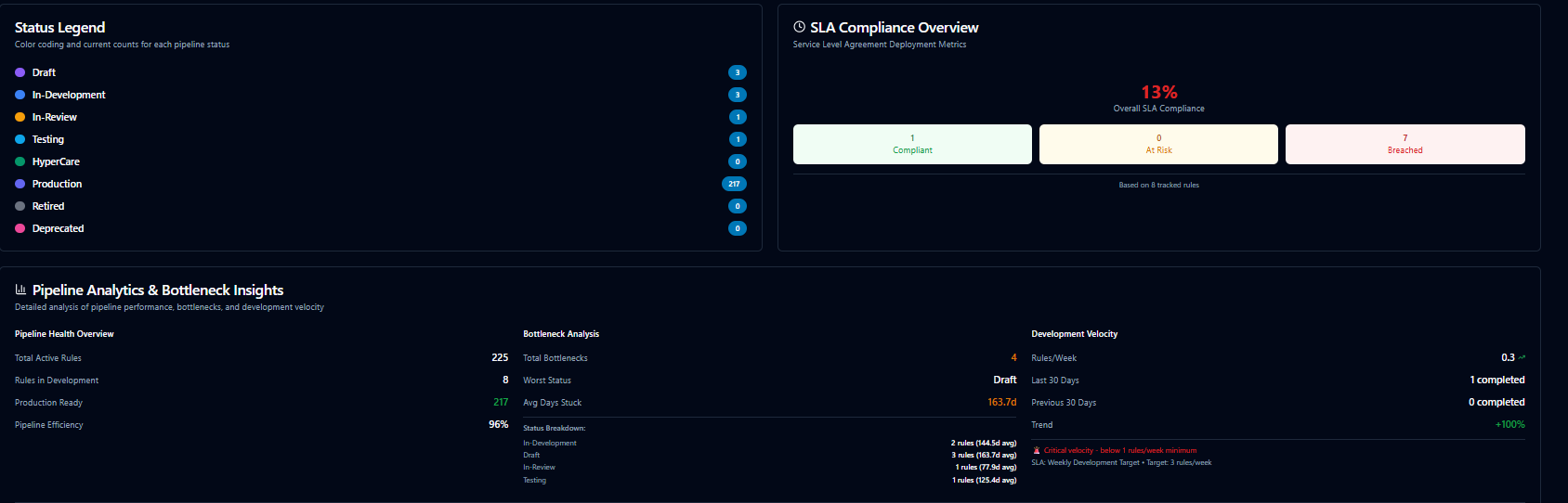
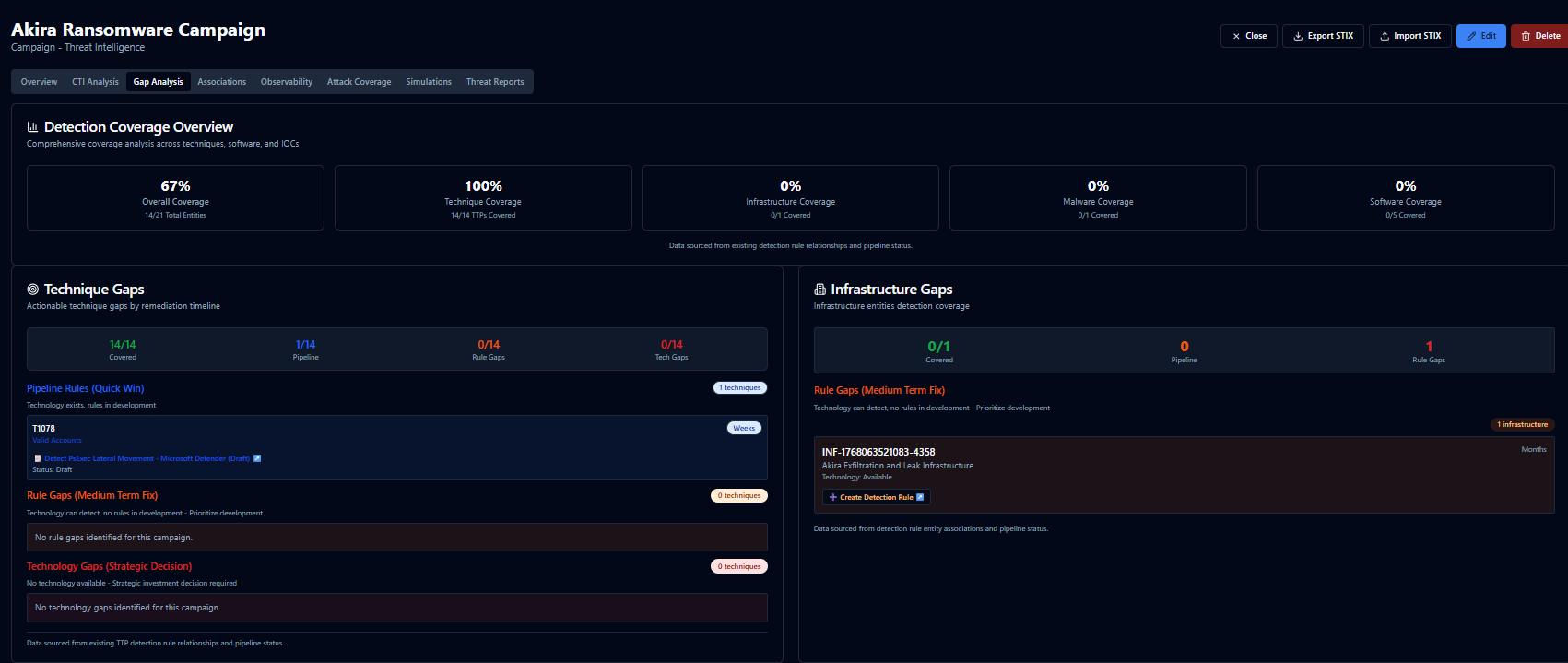
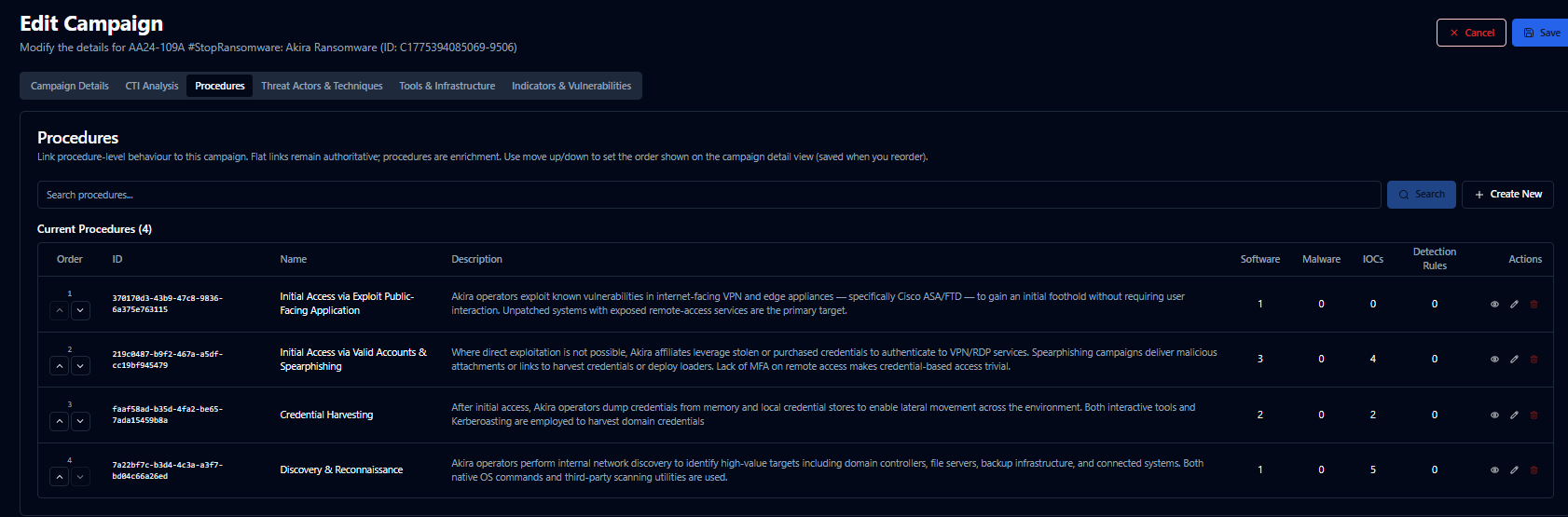
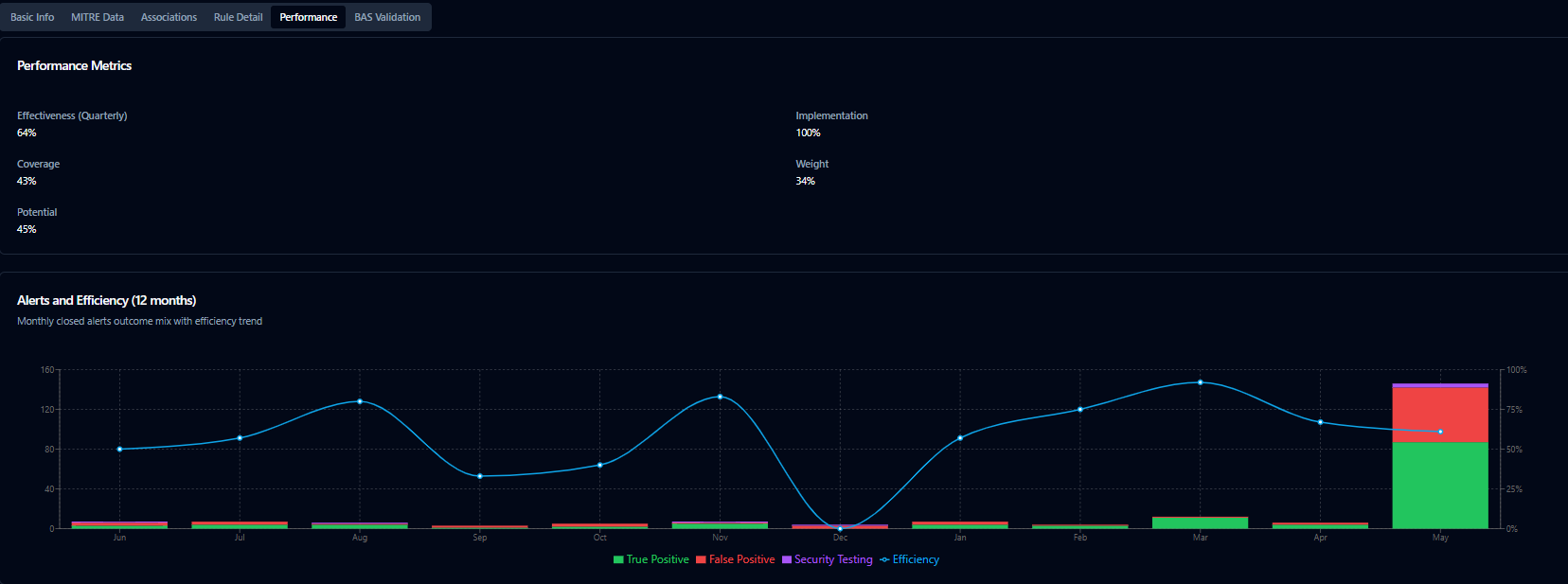
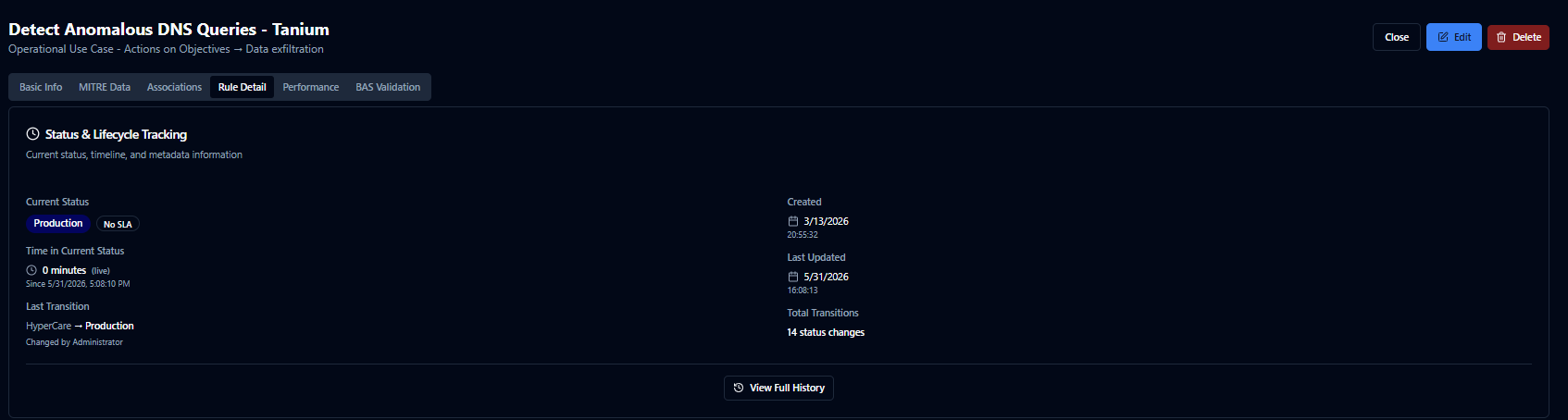
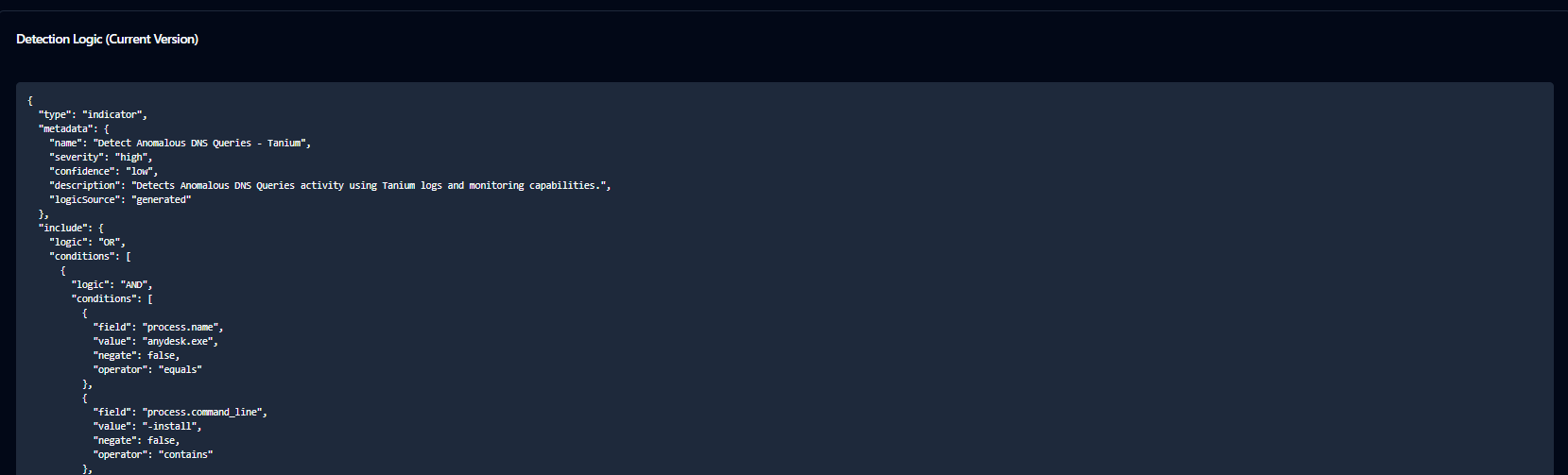
These views show governed lifecycle operations in product: pipeline health, threat-driven prioritisation, procedure-to-rule mapping, alert outcome governance, and rule-level traceability through status, version history, and current logic.
Rule-level traceability
Governed lifecycle also requires knowing current status, version history, and the exact logic under governance. That a rule exists somewhere in the SIEM queue isn’t enough.

Frequently asked questions
How do you manage the full detection rule lifecycle?
Govern state transitions end-to-end: design, deployment, validation, live monitoring, tuning, and retirement, with ownership and evidence at each step so declared and operational states do not drift apart.
What is detection lifecycle management?
Maintaining operational truth over time — linking threat intent, deployed logic, validation evidence, ownership, and production outcomes so lifecycle state does not diverge from reality.
What is lifecycle drift?
When documented lifecycle state diverges from operational reality — validated months ago but no longer firing after parser drift, telemetry changes, stale mappings, or ownership handoffs without re-test.
How is lifecycle management different from measuring effectiveness?
Lifecycle maintains ownership, governed state, and traceability. Effectiveness asks whether detections still work in production. A use case can pass lifecycle review and still fail operationally.
Does lifecycle management replace detection engineering?
No. Engineering continues to build and tune detections. Lifecycle management ensures ownership, evidence, and state transitions persist.
How does lifecycle management relate to a Detection System of Record?
Lifecycle describes the discipline. A DSoR holds the continuous governed record linking use cases to logic, validation, and live outcomes. See the Detection System of Record hub.