SecuMap vs CardinalOps
Direct definition: Comparison page for teams deciding between posture-led detection optimisation and DSoR-governed detection capability.
Not to be confused with: Feature checklist battles. This page focuses on operating model fit and governance outcomes.
Best for teams who: Need to choose a governance model that fits auditability and lifecycle evidence requirements.
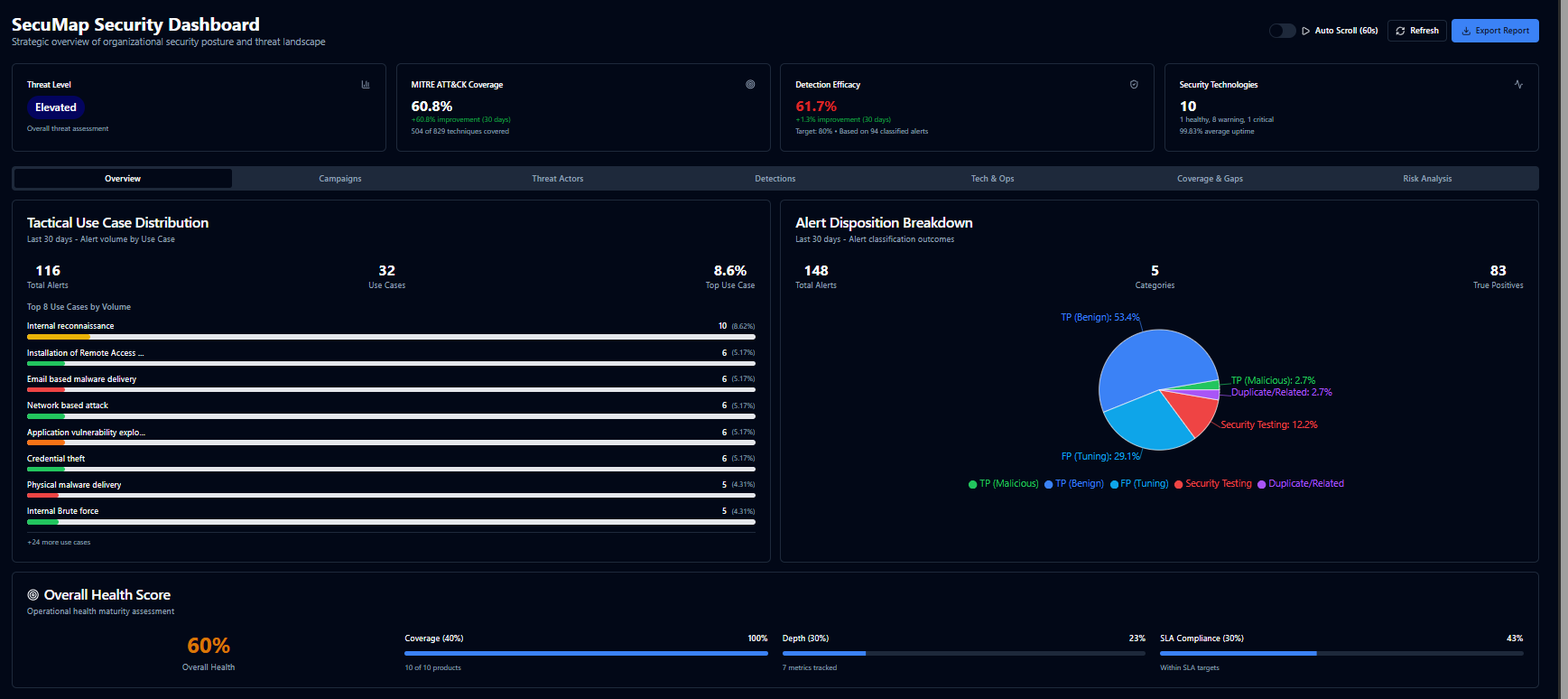
SecuMap leads with Detection System of Record governance to connect threat mapping, validation, and operational outcomes in one auditable model.
Use this comparison to evaluate whether your programme needs continuous system-of-record governance beyond posture improvement alone.
| Focus area | Operational expectation |
|---|---|
| Category framing | SecuMap anchors on DSoR governance; CardinalOps is typically evaluated through posture optimization outcomes. |
| Evidence continuity | SecuMap tracks declared, validated, and operational states as one governed record. |
| Operating model | SecuMap is designed for end-to-end governance continuity, ownership traceability, and decision auditability. |
| Programme decision support | SecuMap prioritises threat-informed detection remediation using cross-tool lifecycle evidence. |
How to decide
Choose SecuMap if...
You need a governed Detection System of Record that links threat intent, validation evidence, and operational outcomes in one lifecycle.
Choose CardinalOps-style posture optimization if...
Your immediate priority is posture optimization workflow improvements without a wider record-governance requirement.
Choose both if...
You want posture optimization inputs and governed lifecycle accountability for executive-level detection confidence decisions.
Frequently asked questions
Is this page claiming tool replacement?
No. SecuMap governs outcomes above existing SIEM, EDR, BAS, and CTI tools.
How should buyers evaluate this comparison?
Evaluate by governance depth, evidence continuity, operating model, and accountability needs.
When should a team choose SecuMap?
Choose SecuMap when you need a Detection System of Record with lifecycle governance across threat mapping, validation, and operational outcomes.
When might CardinalOps-style posture optimization fit better?
It may fit teams focused primarily on posture optimization workflows without broader system-of-record governance requirements.
Can teams use both together?
Yes. Posture optimization can complement DSoR governance when teams need both optimization and lifecycle continuity.