Direct definition: Govern security technology contribution to detection outcomes across SIEM, EDR, BAS, and CTI domains.
Not to be confused with: Tool replacement projects. This capability governs contribution and accountability across existing platforms.
Best for teams who: Need cross-tool detection governance without flattening each tool into one misleading metric.
SecuMap applies Detection System of Record (DSoR) governance to keep cross-tool technology decisions measurable, accountable, and threat-informed.
Security technology management keeps domain-specific signals intact while governing how each tool affects detection confidence and outcomes.
SecuMap operates as a vendor-neutral governance layer above execution and validation tools, preserving investments while improving assurance.
Product evidence: security technology management in operation
These product screenshots show the full security technology management loop: technique-to-technology mapping,
health analytics, BAS baseline validation, BAS discovery feedback, and operational KPI monitoring.
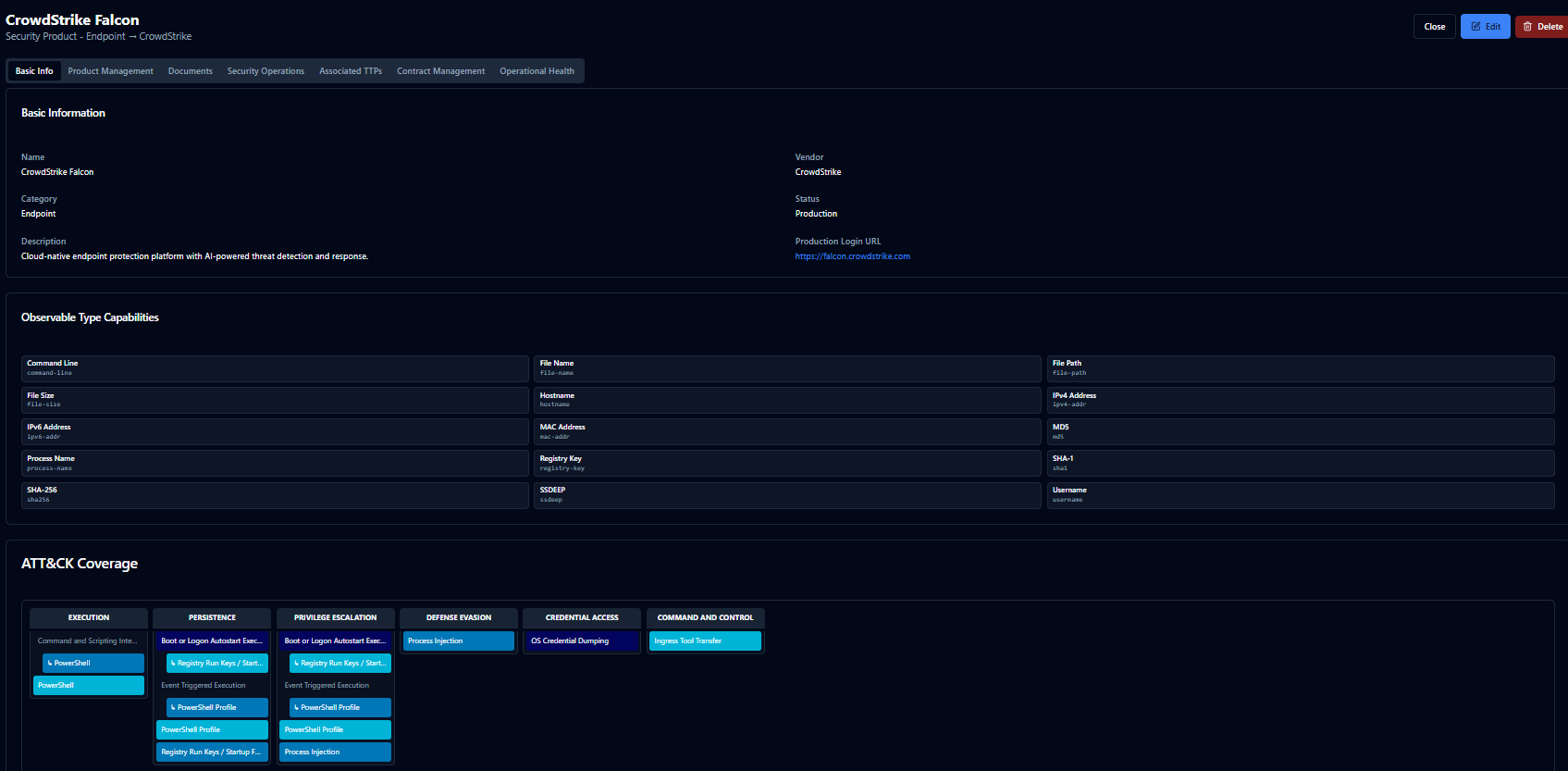
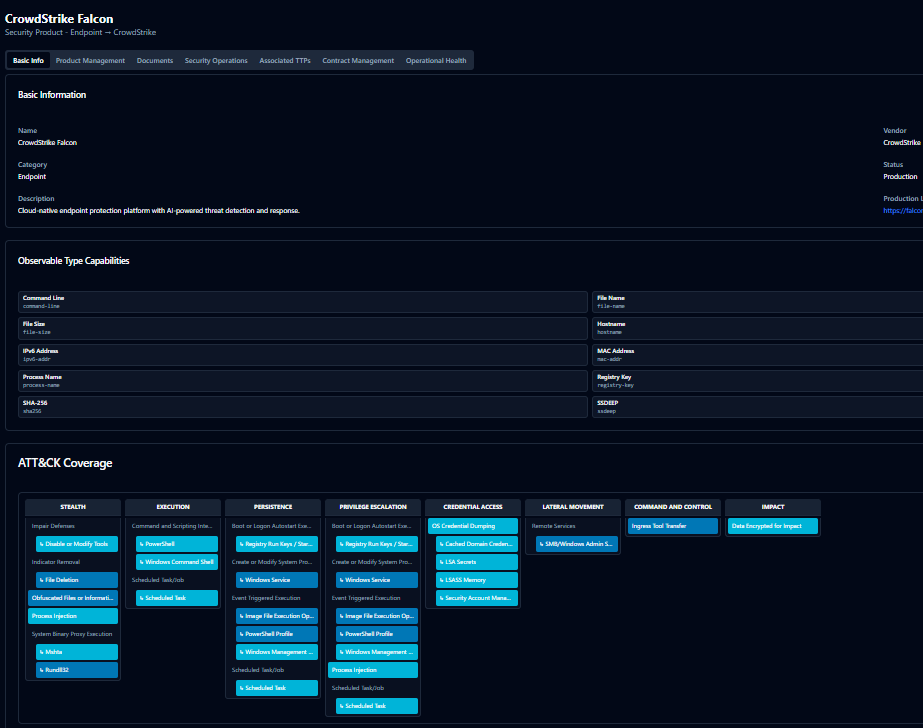
What you are seeing: product screenshot of technology-level mapping from attack techniques to technology capabilities and observables, with rule and ATT&CK coverage context.
Why it matters: this establishes whether priority campaigns can be observed and detected by the underlying product.
Decision enabled: which technologies need capability expansion, rule additions, or observable enrichment.
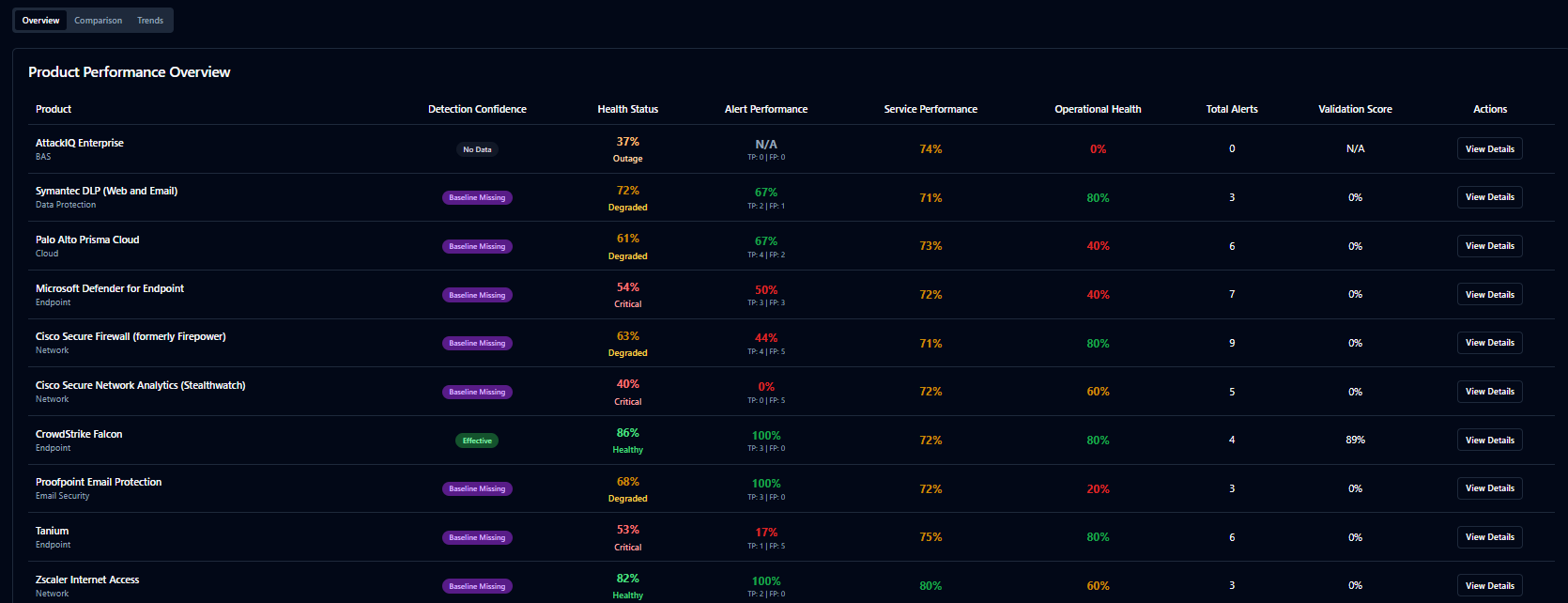
What you are seeing: product screenshot of cross-technology analytics with overall health composed from alert performance, service performance, and operational health.
Why it matters: this shows whether each product is being actively managed and whether confidence is improving or degrading.
Decision enabled: where platform management, service operations, or detection quality work is required, including MSSP-governed environments.
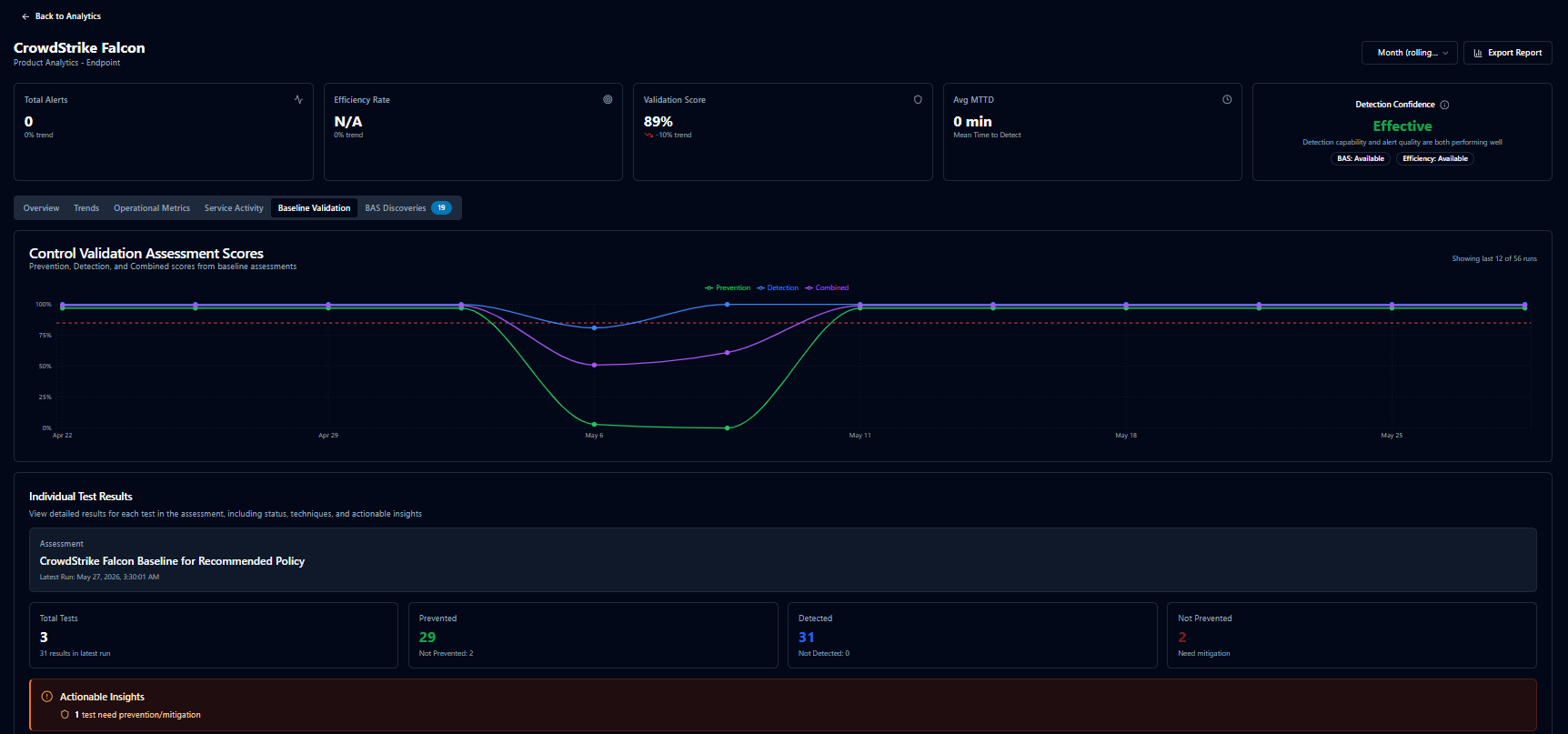
What you are seeing: product screenshot of BAS baseline assessment trends over time for prevention, detection, and combined validation scores.
Why it matters: baseline validation proves whether security technology posture is stable under repeated simulation, beyond being nominally configured.
Decision enabled: whether baseline quality is improving, drifting, or failing agreed confidence thresholds.
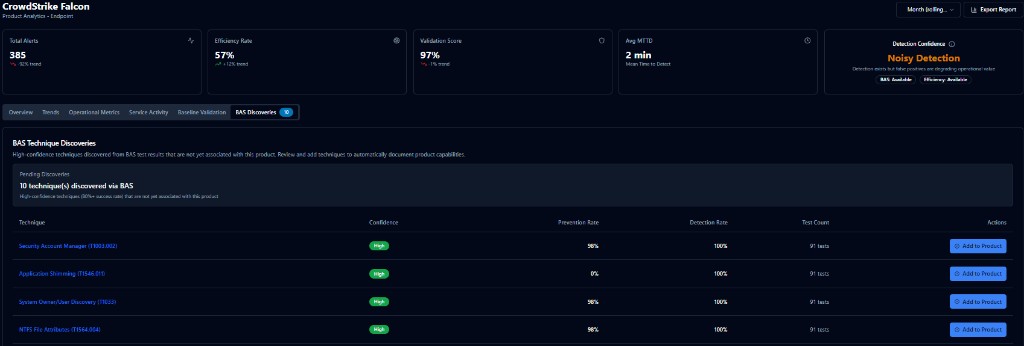
What you are seeing: sample demo of BAS discoveries on a security product record — high-confidence techniques that are not yet associated with that product, with an action to add them.
Why it matters: discoveries from simulation close the loop by expanding techniques linked to each technology.
Decision enabled: which newly evidenced techniques should be associated and governed for ongoing detection confidence.
What you are seeing: sample product ATT&CK coverage after a BAS-discovered technique is added to the product record.
Why it matters: declared coverage changes because validation evidence arrived, not because someone edited a heatmap.
Decision enabled: which evidenced techniques belong on the product record.
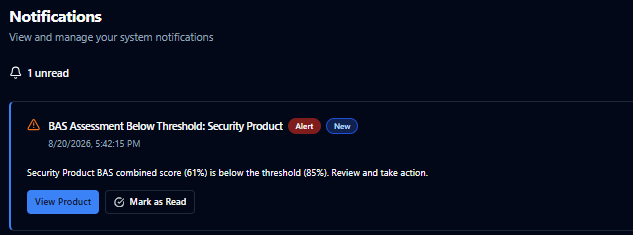
What you are seeing: sample notification when a security product’s BAS assessment falls below the agreed threshold.
Why it matters: threshold breach is visible and actionable, not a caveat in email.
Decision enabled: which product records need review after validation drops.
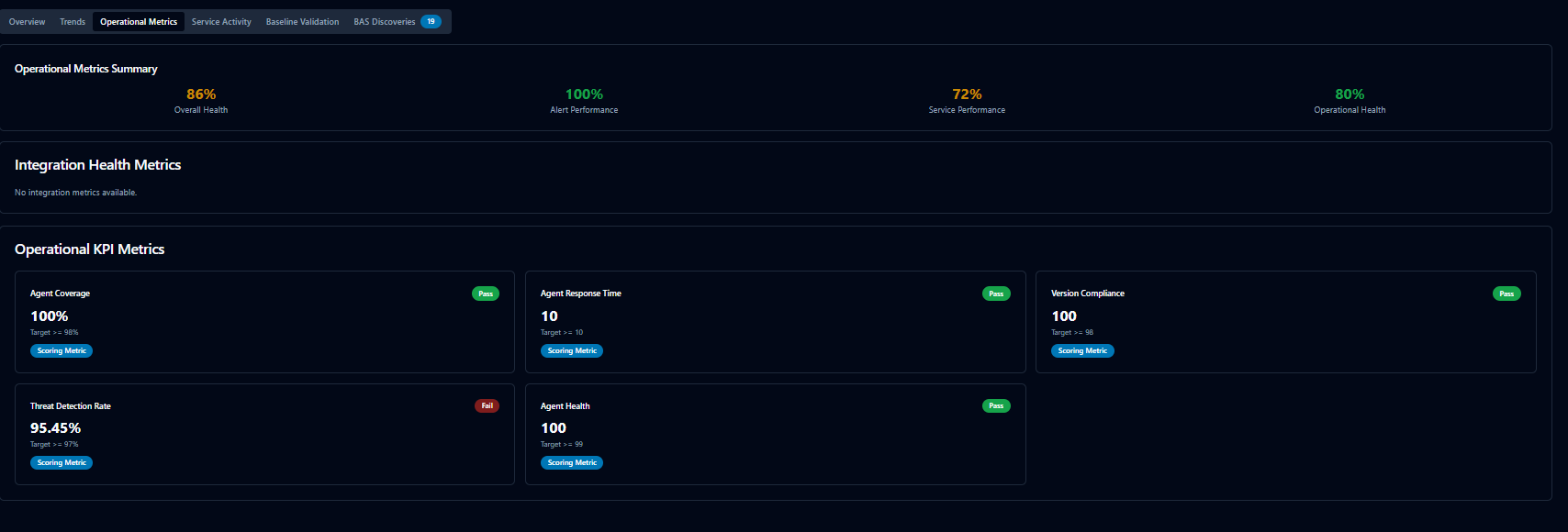
What you are seeing: product screenshot of technology operational metrics monitored against agreed KPI targets, including alert, service, and operational health dimensions.
Why it matters: operational target monitoring demonstrates active management, especially when delivery is outsourced to an MSSP.
Decision enabled: whether technology-specific metrics meet service expectations or require incident, change, or tuning intervention.
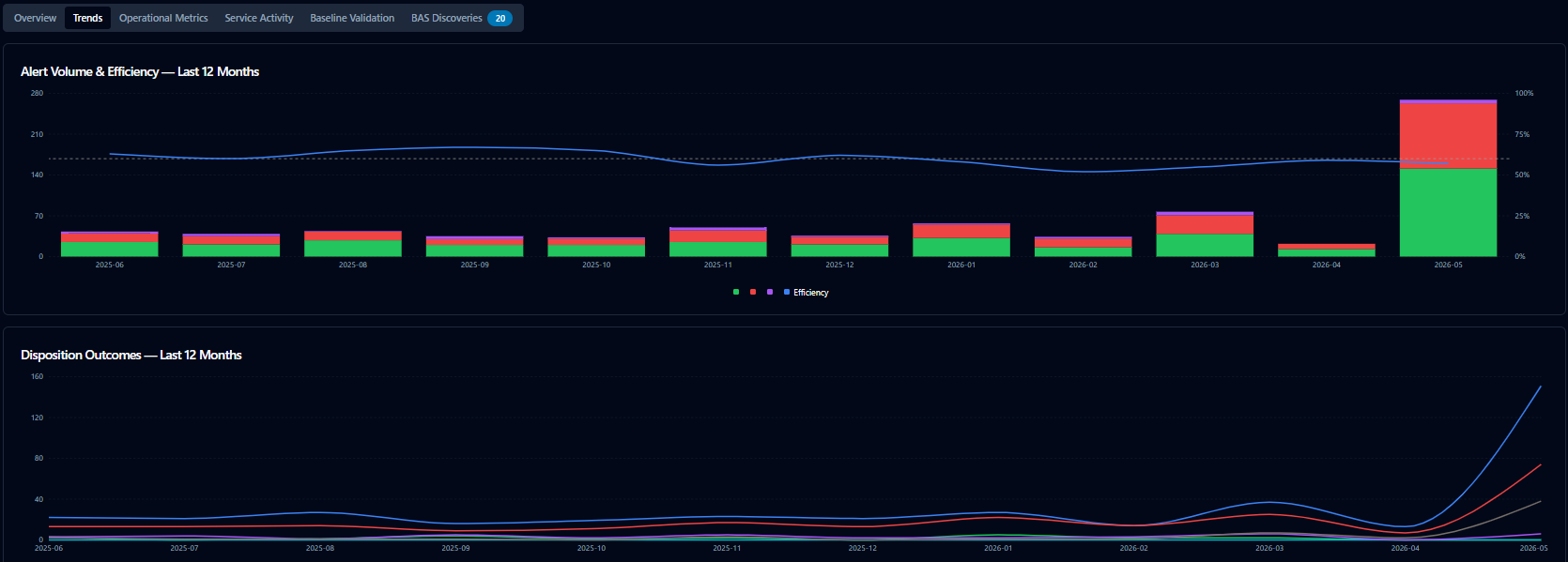
What you are seeing: product screenshot of alerts and investigations over time, combining alert volume, efficiency trend, and disposition outcomes.
Why it matters: this is the evidence base for calculating technology efficiency over time and identifying when operational value is degrading.
Decision enabled: whether tuning, service intervention, or technology remediation is required to restore confidence and efficiency.
Technology governance for threat-informed detection outcomes
Focus area
Operational expectation
Execution systems
SIEM and EDR contribute live alert and operational evidence.
Validation systems
BAS and controlled testing contribute validation and drift evidence.
Intelligence systems
CTI inputs shape threat priority and expected coverage assumptions.
Frequently asked questions
Does this standardise all tools to one score?
No. It governs different evidence types under one detection capability model.
Will this replace SIEM or EDR?
No. SecuMap governs detection outcomes above those execution layers.
What is the main business value?
Clear accountability for detection confidence across technology domains.